


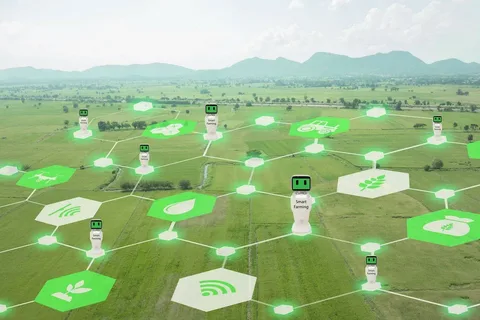
The agricultural industry has always been at the forefront of technological advancements. In recent years, the integration of smart agriculture Artificial Intelligence (AI) and the Internet of Things (IoT) into farming practices has revolutionized the way food is produced, managed, and distributed. These technologies are enabling farmers to boost productivity, reduce waste, and make data-driven decisions, ultimately transforming the landscape of modern agriculture. In this article, we will explore the impact of AI and IoT on modern agricultural practices and how they are shaping the future of farming.
Understanding AI and IoT in Agriculture
Before diving into their impact, it is essential to understand what AI and IoT mean in the context of agriculture.
What is AI in Agriculture?
AI refers to the use of advanced algorithms and machine learning models to analyze large amounts of data and automate tasks that traditionally required human intervention. In agriculture, AI can be used for crop monitoring, predicting yields, diagnosing plant diseases, and even making real-time decisions to optimize farming operations.
What is IoT in Agriculture?
The Internet of Things (IoT) in agriculture involves the use of connected devices such as sensors, cameras, and drones to collect and transmit data about soil conditions, weather patterns, and crop health. These devices are interconnected through the internet, providing farmers with real-time insights into their operations.
Enhancing Crop Monitoring and Management
One of the most significant impacts of AI and IoT on modern agricultural practices is in crop monitoring and management. IoT sensors can be placed in the field to collect data on various environmental factors such as soil moisture, temperature, and nutrient levels. This real-time data is then analyzed using AI algorithms, which can provide insights into the optimal conditions for crop growth.
Precision Agriculture: A Game-Changer for Farmers
With the help of AI and IoT, farmers can now practice precision agriculture, where farming practices are tailored to the specific needs of each plant or section of the field. AI-powered systems can analyze data from IoT sensors to recommend the right amount of water, fertilizers, and pesticides needed, minimizing resource waste and enhancing yield.
For instance, if a sensor detects a dry patch of soil, AI algorithms can suggest irrigation adjustments for that specific area, ensuring efficient water usage. This level of precision was previously impossible with traditional farming methods.
Predicting Crop Yields and Reducing Risks
AI’s ability to process vast amounts of data and recognize patterns makes it invaluable for predicting crop yields and assessing risks. By analyzing historical data on weather patterns, soil health, and crop performance, AI can predict how a crop will fare under certain conditions, helping farmers plan their harvest and marketing strategies.
Risk Management with AI and IoT
In addition to yield predictions, AI and IoT can help farmers manage risks associated with climate change, pest outbreaks, and diseases. By collecting data from multiple sources, farmers can make informed decisions about when to apply pesticides or deploy drones to combat pest infestations. The use of AI in conjunction with IoT sensors helps detect early signs of disease, enabling farmers to act quickly and prevent crop loss.
Sustainable Farming Practices
AI and IoT also play a significant role in promoting sustainable farming practices. The ability to optimize resource usage leads to more efficient operations, reducing the environmental footprint of farming.
Water Conservation
Water management is one area where AI and IoT have made a substantial impact. By utilizing sensors that monitor soil moisture levels and weather forecasts, farmers can precisely control irrigation schedules. This not only conserves water but also ensures crops receive just the right amount of water for healthy growth.
Reducing Chemical Use
AI and IoT also contribute to reducing the reliance on harmful chemicals. With the ability to precisely monitor crop health and pest populations, farmers can apply fertilizers and pesticides only when necessary. This targeted approach reduces the overall chemical usage, minimizing its environmental impact.
The Future of AI and IoT in Agriculture
As technology continues to evolve, the role of AI and IoT in modern agriculture will only expand. From autonomous tractors to AI-driven decision support systems, the future of farming will be increasingly tech-driven.
Autonomous Equipment
In the near future, autonomous tractors, harvesters, and drones may become commonplace on farms. These machines, powered by AI, will be able to carry out tasks such as planting, fertilizing, and harvesting crops with little to no human intervention. This shift will improve efficiency, reduce labor costs, and ensure that tasks are completed at optimal times.
Data-Driven Agriculture
As the amount of data generated by IoT devices grows, AI systems will become more sophisticated in interpreting and acting on this data. In the future, farmers will have access to even more granular insights into their operations, enabling them to make better decisions and further enhance productivity and sustainability.
Conclusion: The Transformative Impact of AI and IoT on Agriculture
The impact of AI and IoT on modern agricultural practices is profound and far-reaching. From improving crop management and predicting yields to promoting sustainability, these technologies are helping farmers achieve higher productivity and efficiency while minimizing resource use. As technology continues to evolve, the potential for AI and IoT to reshape agriculture is limitless, leading to a more sustainable and prosperous future for the farming industry.
