


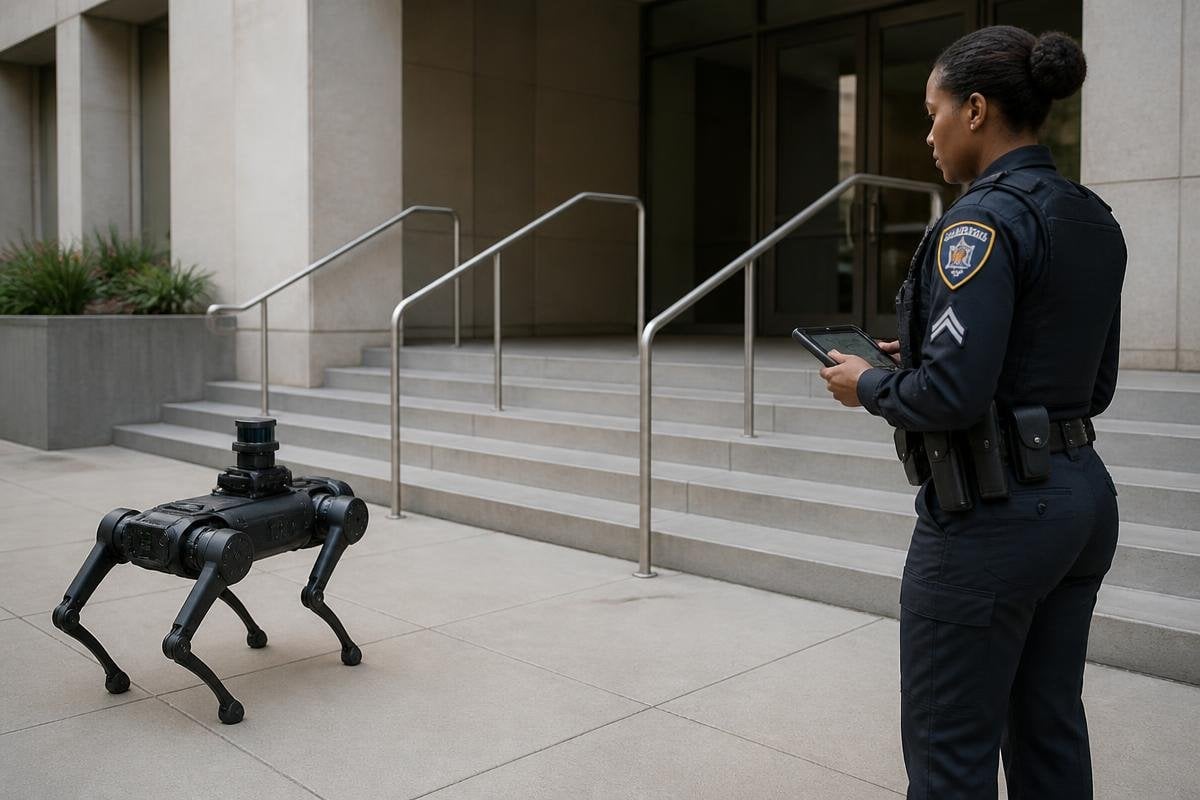
A police robot can enter a building, record a street, inspect a package, or carry a device into a dangerous area. The machine may reduce risk for officers, but it can also extend police power into places where people expect privacy.
Quick read
- People should know when a police robot is operating near them.
- A human officer should remain responsible for each decision.
- Robot footage and sensor data should have strict limits on use and storage.
People need notice and a reason
The first right is notice. If a police robot records video, scans an area, or uses a sensor that can identify people, the public should be told what the machine does and why it is being used.
That notice should come before routine use when safety allows it. A sign, public policy, or incident report can explain the robot’s purpose, the agency in charge, the data it collects, and the period for storage. Emergency work may require a faster decision, but the agency should still publish the details afterward.
Sending a robot to inspect a suspicious package raises a different concern from using one to watch a protest. The task, location, and risk should shape the legal threshold. A broad claim that a robot is “for safety” isn’t enough to justify every use.
A human must remain accountable
A remote operator or police supervisor should approve each use and record the reason. The machine can move, record, or carry equipment, but it can’t take legal responsibility for the result.
Mistakes still need a human answer. A camera may misread a person, a map may place the robot in the wrong area, or a connection may fail during an operation. The public needs a named agency and a clear process for complaints, records requests, and court review.
I’d require a written record for every police robot operation: operator, time, location, task, data collected, and any use of force. Without one, a person affected by the machine has little way to challenge what happened.
A written record matters when people can compare a police robot’s stated role with the task it performed. Reporting from Robot24 can connect those claims to named machines, dates, and sources before the next section sets a narrow limit on the data each operation collects.
Data needs a narrow limit
Its sensors can collect more than the operator sees at the time. Video, audio, thermal images, location data, and software logs may remain after an operation ends. Rules should state which data the robot may collect and which data it must leave alone.
Police agencies should keep footage only for a stated period unless it belongs to an active case. They should also limit access and record each review.
Agencies should forbid new uses without a separate legal basis. A robot bought for bomb disposal should not quietly become a tool for routine crowd monitoring.
People should be able to ask for records about a robot program, subject to narrow limits for active investigations and personal safety. Procurement documents, operating policies, audits, and incident counts belong in public records where local law permits.
Safety and equal treatment
Physical safety needs its own rules. A robot working near homes, schools, or crowds should have a tested stop control, a clear operator link, and a plan for loss of power or communication. Agencies should publish what the robot can carry, how fast it can move, and when an officer must stop the operation.
The same safeguards apply to software that identifies people or flags behavior. A person should be told when an automated result played a part in police action, and an officer should check that result before making a serious decision. The person needs a way to correct false records.
These rights should apply across neighborhoods. Agencies should publish use by location and task so the public can see who bears the burden of testing. Independent review is needed when a program collects sensitive data or uses force.
A practical rights checklist
Before a police robot program starts, ask for:
- A public policy: purpose, location, operator, sensors, and legal authority
- A use log: date, task, staff member, outcome, damage, and complaints
- A data rule: collection limits, storage time, access records, and deletion
- A safety test: stop controls, communication failure, power loss, and crowd use
- A review path: records requests, complaints, court access, and outside audits
- A funding record: purchase price, maintenance cost, software fees, and contracts
The rights question is who controls the robot and who can see its actions, challenge its records, and hold a person or agency responsible when the machine causes harm.
Those answers should appear in writing before a police robot enters public life, with the records available before routine use begins.
